

鳴瀧窯
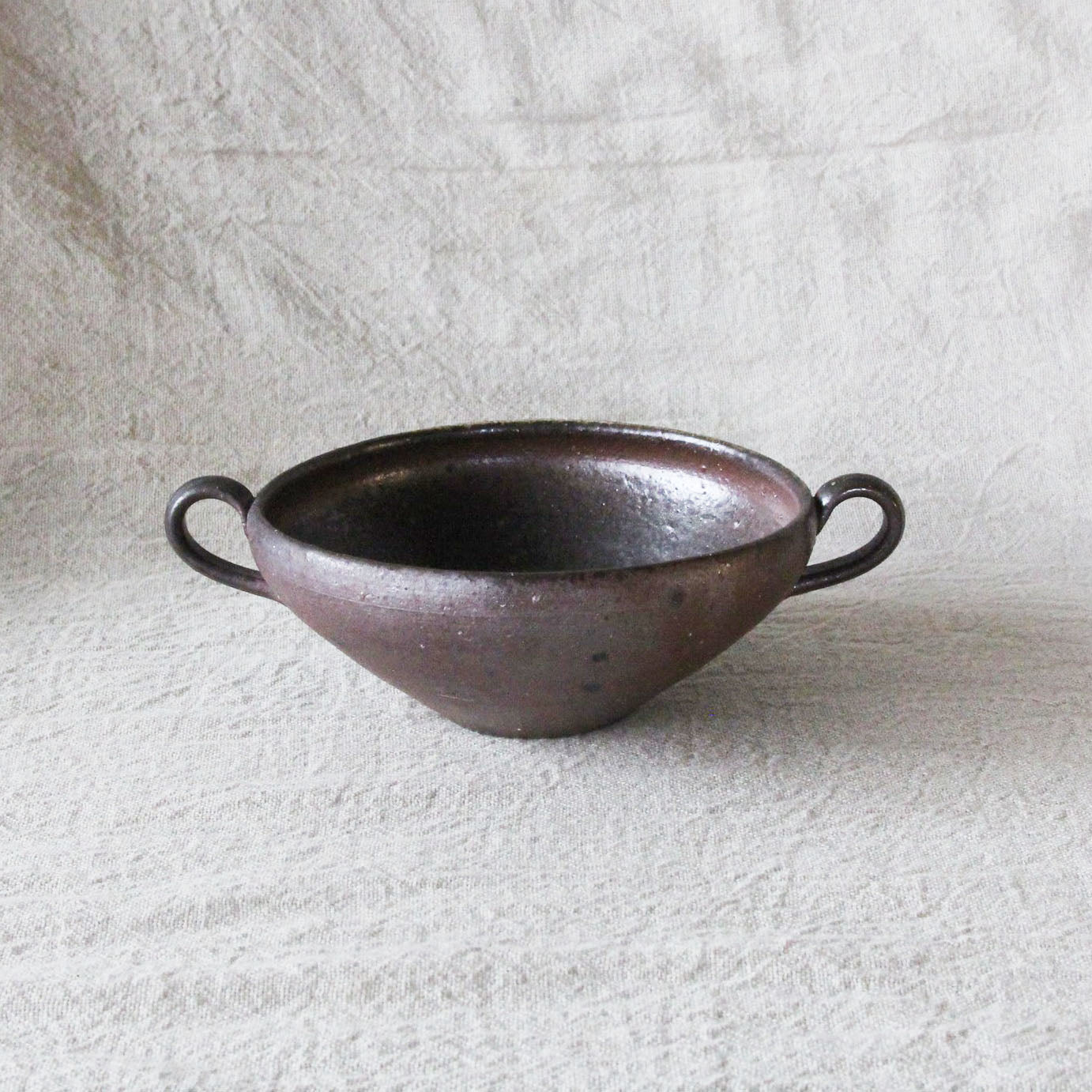
Soup bowl
Soup bowl
Supplementary product information
Supplementary product information
Production area: Okayama Prefecture
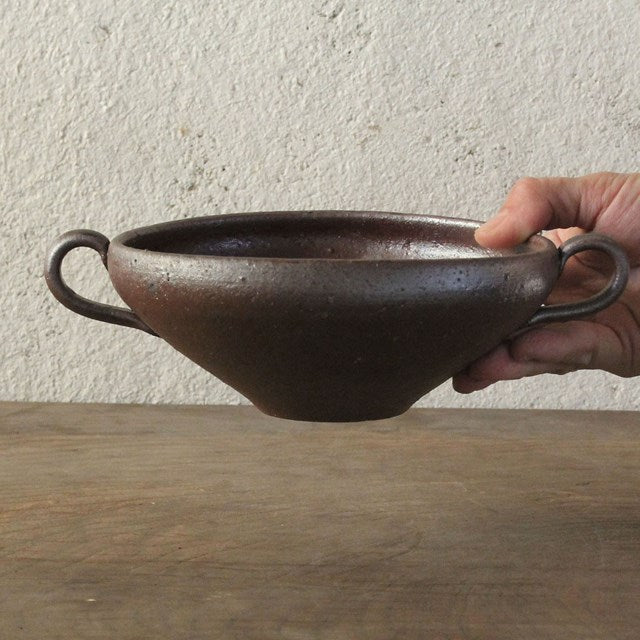
Size:
・(Height) 60mm
・(Diameter) 85mm
・(Including handle) 110mm
Material: Ceramics
Capacity: Approximately 200mL
Electronic appliances: Not dishwasher safe / Microwave △ (Light warming is possible)
【Before use】
As this is made from natural clay, the surface has fine irregularities where oils and moisture can easily penetrate.
To prevent this as much as possible, we recommend soaking in water for about 30 minutes before use if possible. Please note that cups and similar items may inevitably develop color staining from coffee and other beverages.
【After use】
Dish soap may be used, but please wash as soon as possible. After washing, we recommend allowing to air dry naturally before storing.
【About color staining】
Coffee, tea, and other strongly pigmented substances will gradually cause staining on the vessel. For bothersome stains, please try oxygen bleach. Also, please do not use boiling water when using. Bizen-yaki is pottery that is sensitive to sudden temperature changes.
Couldn't load pickup availability
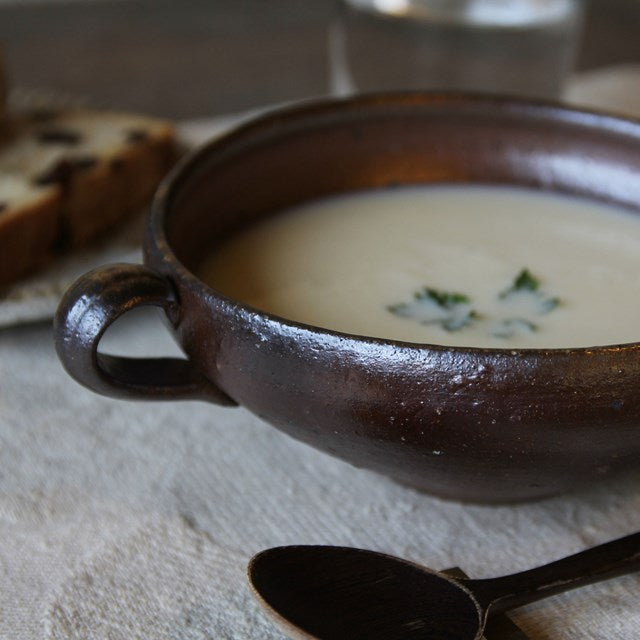
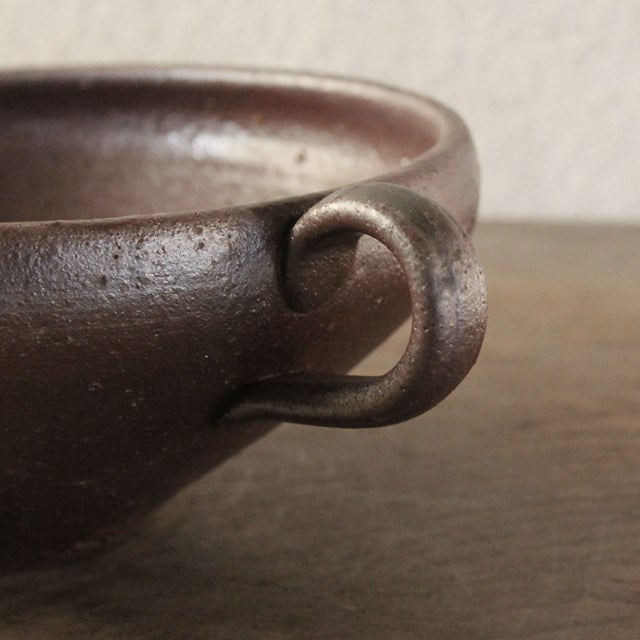
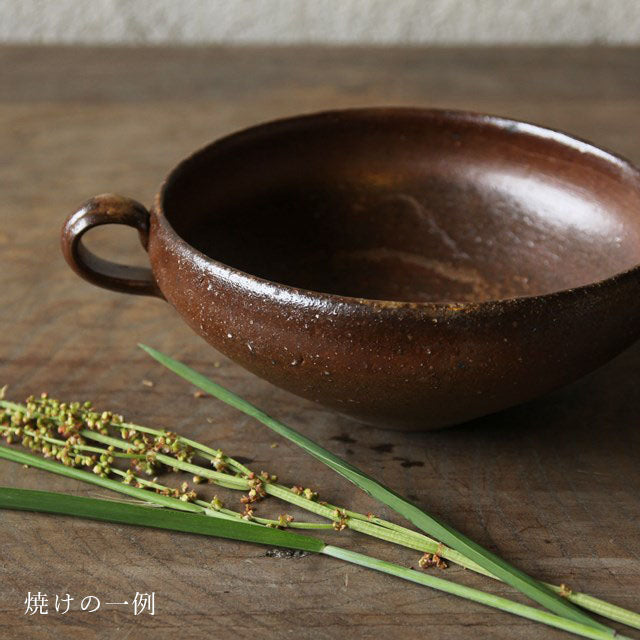
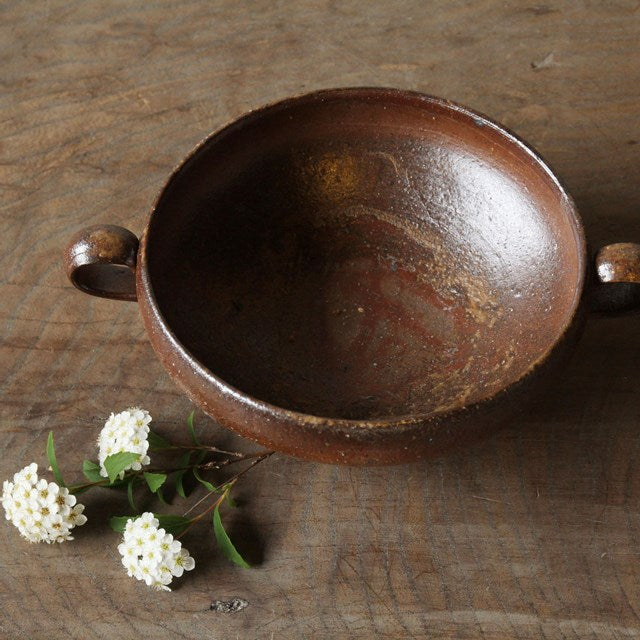
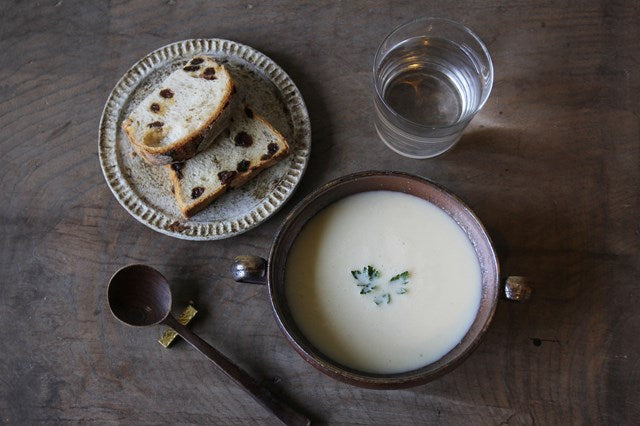
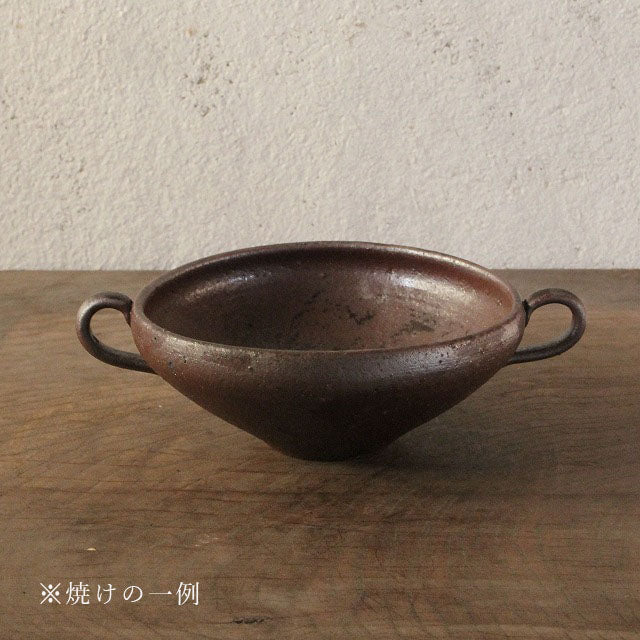
Bizen pottery soup bowl.
With its adequate depth, you can serve generous portions. (Capacity: approximately 250mL)The bright colors of white stew or vichyssoise beautifully complement the chic tones of Bizen pottery.
Please note:
Bizen pottery cannot be used over direct flame.It cannot be used as a gratin dish in toaster ovens or ovens. Please understand this in advance.
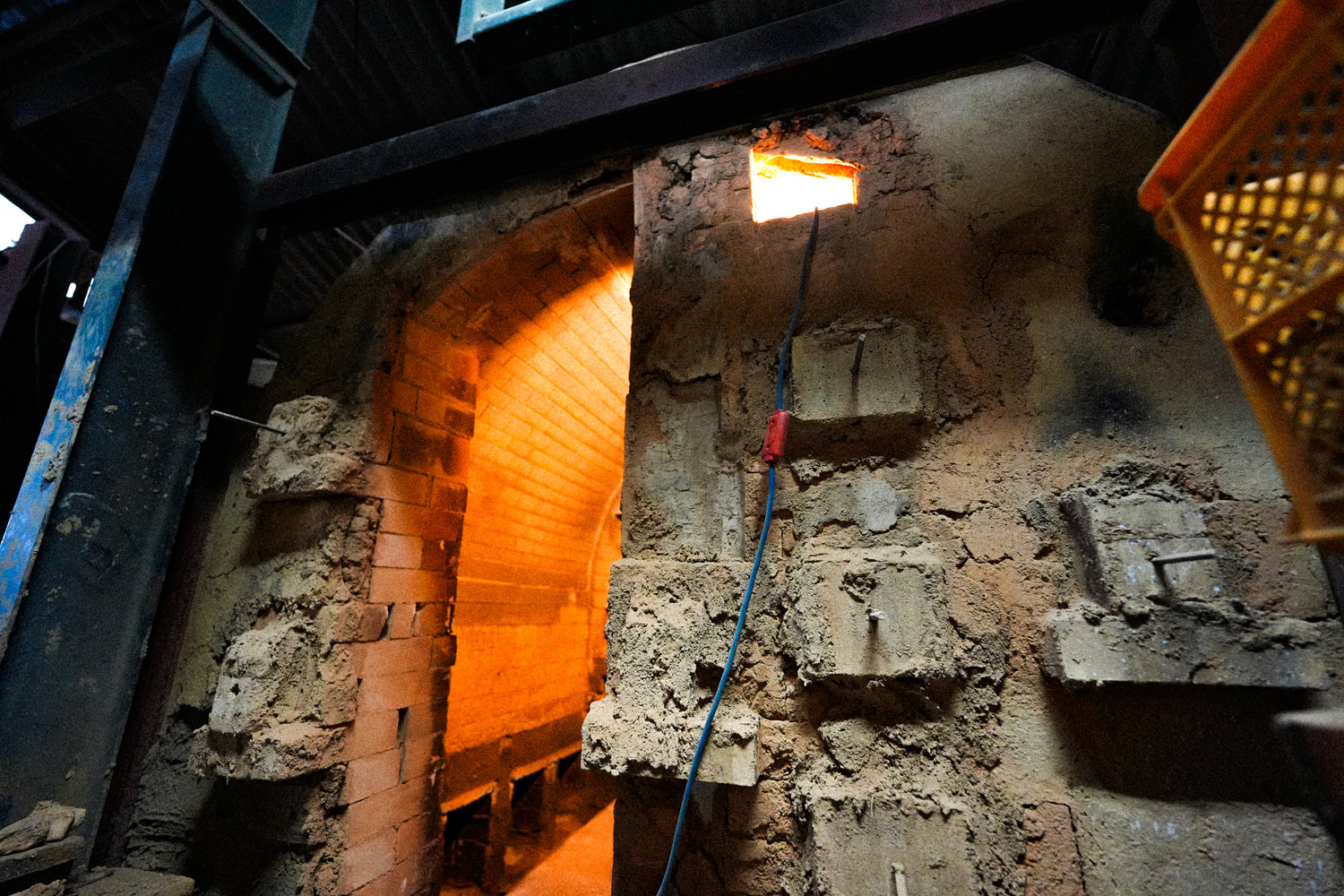
The History of Bizen Pottery
Bizen pottery is said to have originated from the gradual development of Sue pottery (sueki) production methods from the Kofun period, with the production of everyday utensils such as bowls, plates, and roof tiles during the Heian period. By the Kamakura period, pieces with the characteristic reddish-brown fired surface that we see today began to be produced.

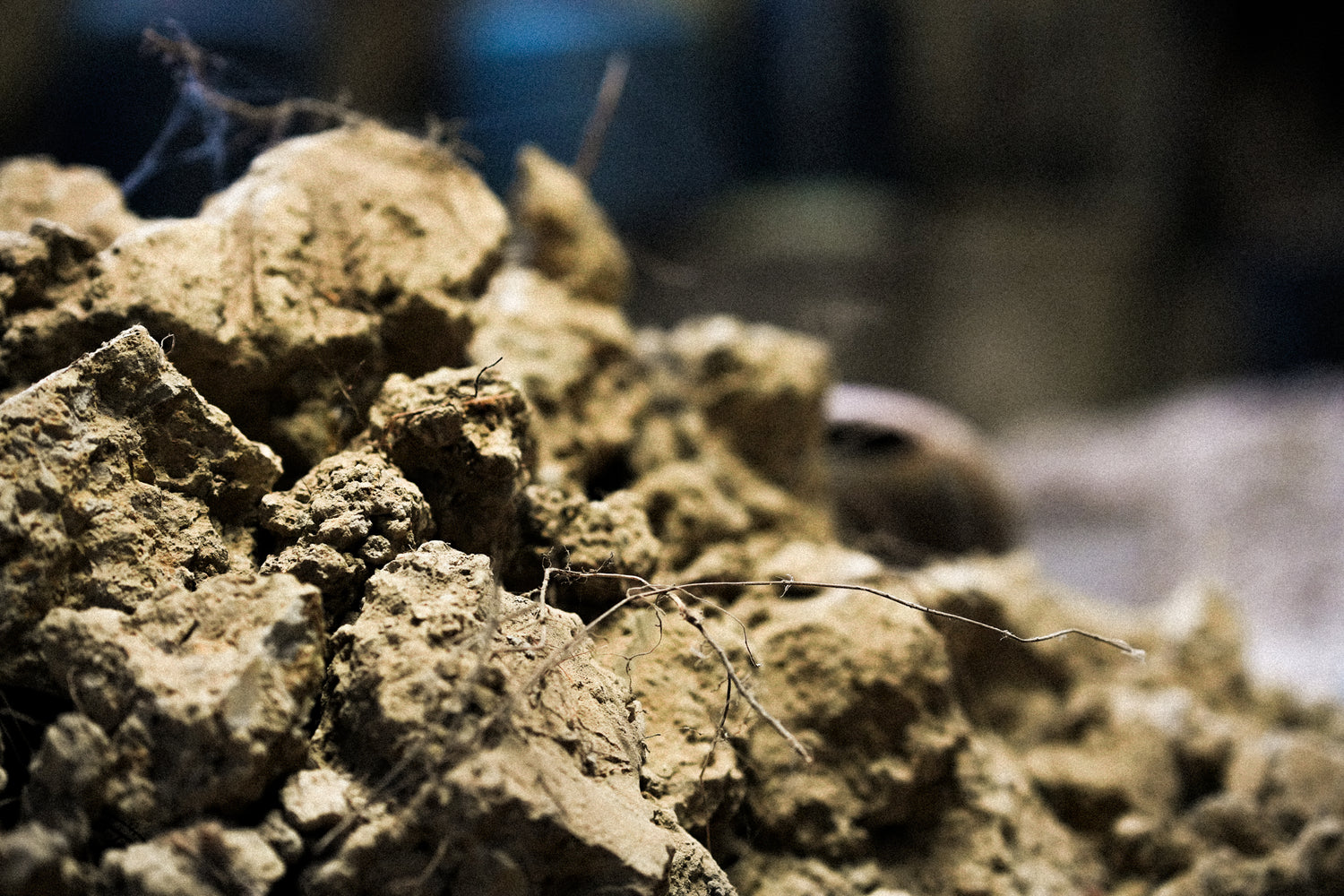
Characteristics of Bizen ware
We use clay called "hiyose," which is a mixture of soil excavated from rice fields combined with mountain soil and black soil containing iron. Without using glaze, the pottery is fired at high temperatures of 1200-1300 degrees to create a hard, tightly sintered finish that produces a distinctive reddish-brown surface. The patterns created through "kiln transformation" are entirely unique, with no two pieces being identical.

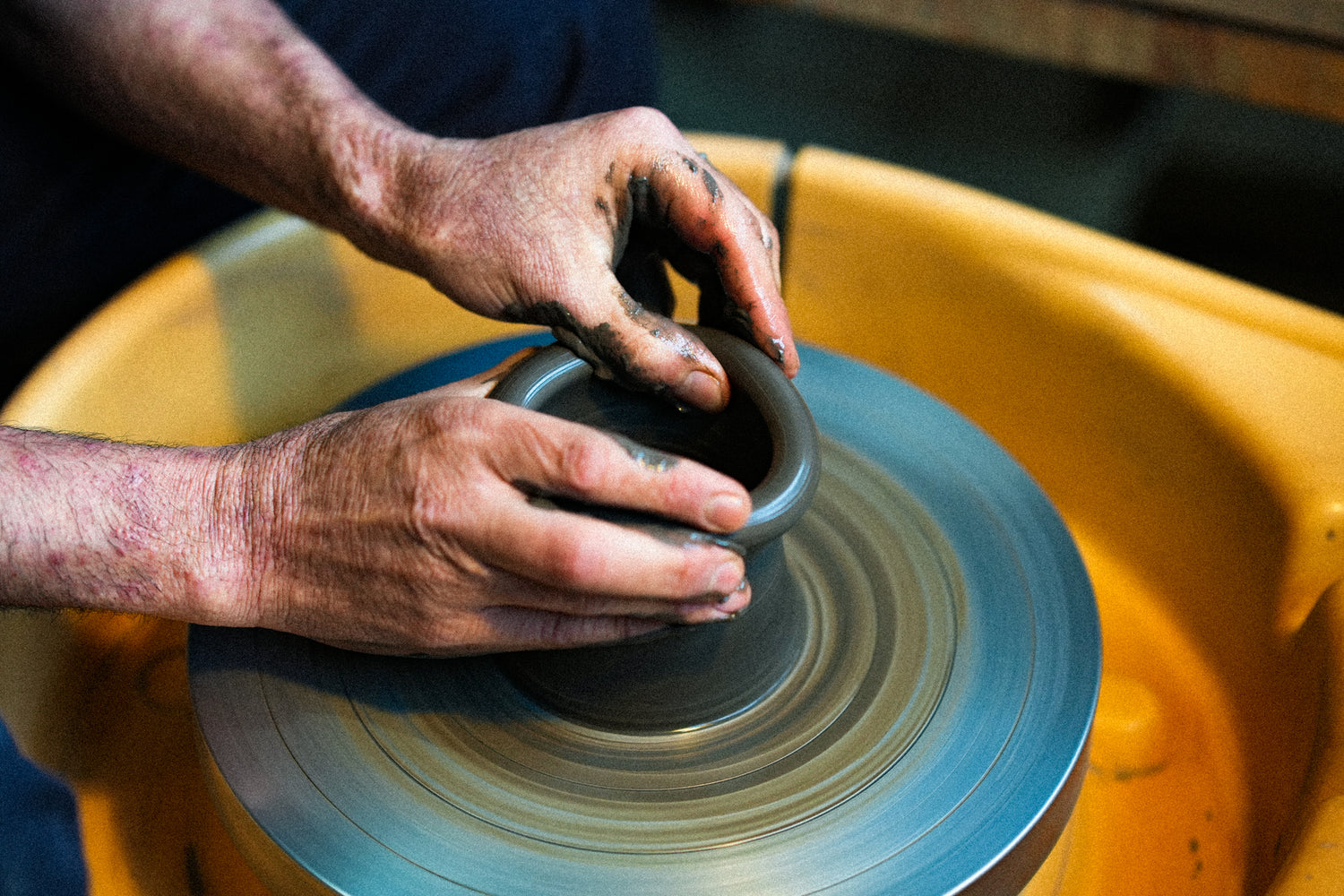
Bizen ware manufacturing process
In Bizen pottery, where clay itself becomes the vessel, the selection and preparation of clay is crucial, and the clay's characteristics reflect the individuality of each kiln or artisan. After shaping with a potter's wheel or hand-building techniques, the pieces are naturally dried and fired in climbing kilns or electric kilns. The firing of Bizen pottery is typically done using split red pine wood.
Bizen ware
Bizen pottery is produced in the area around Bizen City, Okayama Prefecture. Along with Seto, Tokoname, Tamba, Shigaraki, and Echizen, it is counted as one of Japan's Six Ancient Kilns. Bizen pottery is formed from high-quality clay, dried, and then fired without painting or glazing, allowing the natural character of the clay to emerge beautifully. The fired surfaces display distinctive patterns such as goma, sangiri, and hidasuki, which are created by the arrangement in the kiln and the effects of ash and straw components that adhere during firing, ensuring that no two pieces have identical patterns.
為您介紹其他商品
-
moment pot
Regular price $536.00Regular priceUnit price per -
OTM Vert Dripper M Black (1-4 cups)
Regular price $402.00Regular priceUnit price per -
Coffee cup (Nobori)
Regular price $215.00Regular priceUnit price per -
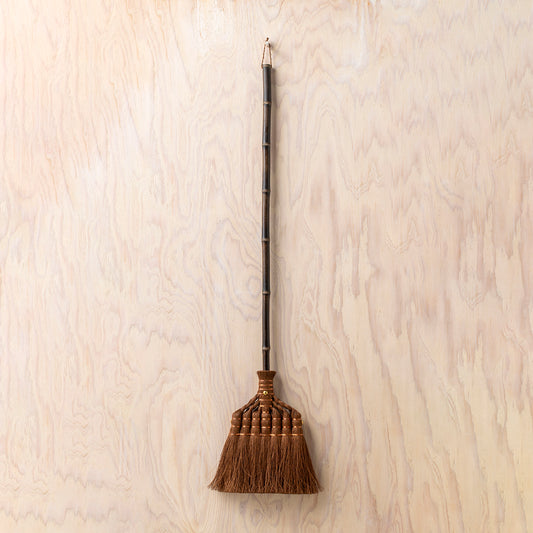
7 domestic palm brooms
Regular price $1,540.00Regular priceUnit price per